The Skunk Ape: A Skeptical, Sourced Florida Briefing
 sinisterplaces
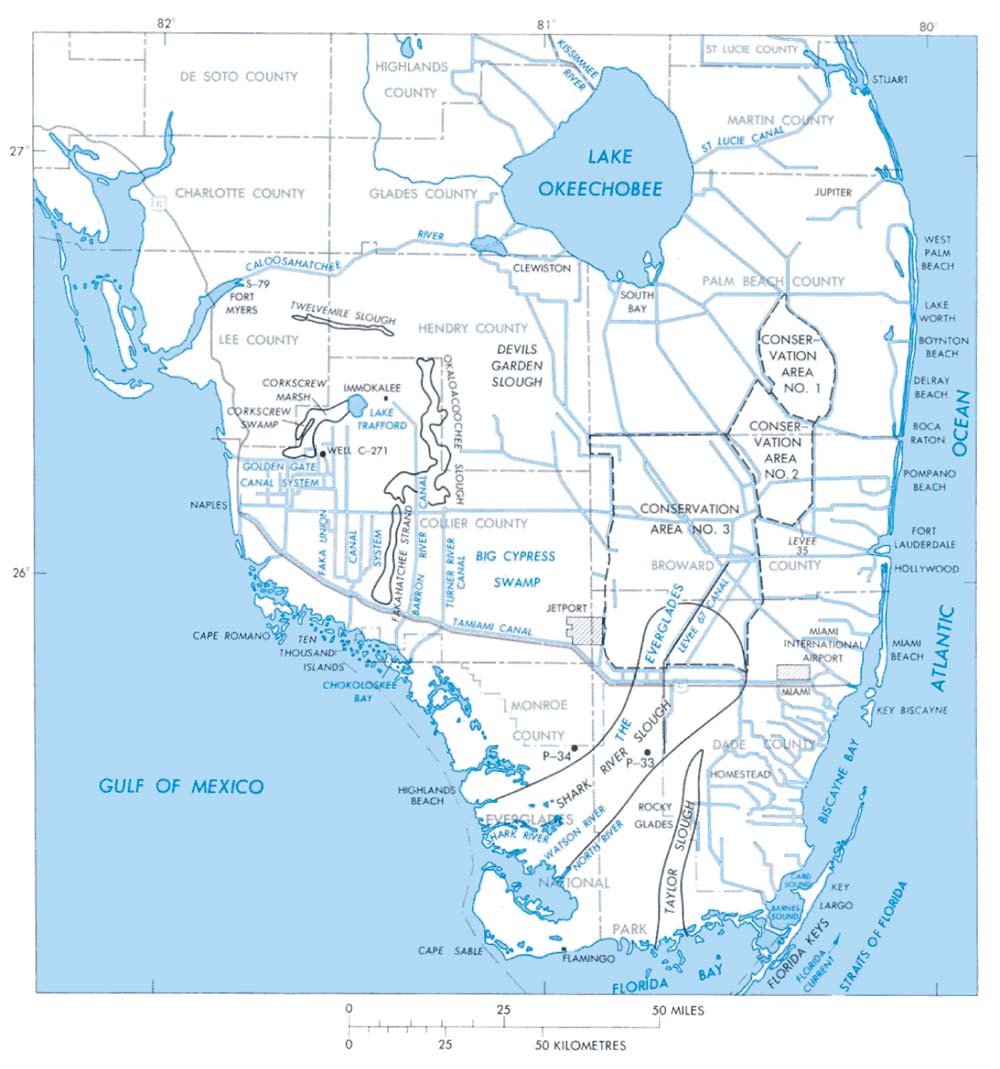
South Florida cypress swamp. United States Geological Survey, public domain, via <a href="https://commons.wikimedia.org/wiki/File:South_Florida_Big_Cypress_Swamp.jpg">Wikimedia Commons</a>. Used here as Florida swamp habitat, not as a photograph of a Skunk Ape.
Disclosure: As an Amazon Associate I earn from qualifying purchases. Bookshop.org and GhostStop links, where they still appear as placeholders, are not live referrals until those programs are approved. See our Affiliate Disclosure.
Florida does not have Bigfoot, at least not under that name. What it has is a long-running swamp story: a large, foul-smelling biped that people in South and Central Florida have been reporting for decades. They call it the Skunk Ape.
This is a folklore briefing, not a sighting report and not a takedown. We are not going to tell you the animal is real. We are also not going to pretend the reports simply stopped.
What people say they are seeing
In the standard description, the Skunk Ape is a tall, ape-like figure — often given as around seven feet — with dark hair and an odor that is part of the name, not an optional detail. The setting is usually swamp, prairie, or a back road at the edge of a populated Florida county, not a Pacific Northwest forest. That local texture is why the story persists as a Florida story rather than a borrowed Bigfoot copy.
Local television still treats it as a living legend, not a closed case. ClickOrlando ran an explainer on May 25, 2026 under the headline “Have you heard of Florida’s legendary Skunk Ape? Here’s what to know.” That 2026 coverage, at least in the sources we opened for this article, was a primer on the existing legend rather than a verified new “bombshell” sighting. If a later claim comes with clear, checkable evidence, it should be checked in the open. Until then, the honest status is: the stories continue; the proof has not landed.
The Myakka photographs, and why people still argue
The pictures most often attached to the modern argument are the so-called Myakka photographs, a pair of shots that surfaced around 2000 and were said to have been taken in the Sarasota County area near Myakka. They show a hunched, dark, ape-like figure close to a camera. They are the images people pull up when they want to say “see?” and the images other people pull up when they want to say “costume.”
We are not going to declare those photographs a hoax or a revelation in this article. We do not have a chain of custody, a named photographer we can independently interview, or a forensic report we can stand behind. What we can say is more limited and more useful: those pictures are a big reason the argument is still happening a quarter-century later, and they are not, by themselves, proof of an unknown primate.
That is the stance we will keep. Folklore can be interesting without being converted into a true-crime-style “case file” it has not earned.
How to walk in the woods without making this worse
If the legend is what sent you to a public boardwalk or a state park, go as a visitor. Stay on marked trails. Do not hike into a preserve after hours. Do not bait, track, or harass wildlife. Do not treat backyards or posted land as a search grid. Florida already has enough real hazards in the swamp — heat, water, alligators, getting lost — without adding trespassing to the list.
A headlamp and a charged phone are reasonable. A “Skunk Ape hunt” on private land is not. See our legal kit article for the same permission-first rule applied to night walks and tours.
If you are building a small Florida folklore shelf, start with Carlson’s Weird Florida. If you are walking a public trail after dark, a basic headlamp is a safety tool, not a way to “find the ape.”
- Weird Florida: Your Travel Guide to Florida’s Local Legends and Best Kept Secrets (Volume 8) on Amazon
- Energizer Vision HD+ LED Headlamp on Amazon
As an Amazon Associate I earn from qualifying purchases.
Affiliate link placeholder — Bookshop.org: Add a tagged Bookshop.org link for Charlie Carlson’s Weird Florida and any other in-print Florida folklore titles after that program accepts the site.
Sources
- “Have you heard of Florida’s legendary Skunk Ape? Here’s what to know,” ClickOrlando / WKMG, May 25, 2026.
- The Myakka photographs (c. 2000) are discussed here only as the widely circulated images that keep the public argument going, not as evidence we have verified.
Related: Liminal Florida and the I-4 Dead Zone.
Featured image credit: South Florida cypress swamp. United States Geological Survey, public domain, via Wikimedia Commons. Used here as Florida swamp habitat, not as a photograph of a Skunk Ape.